

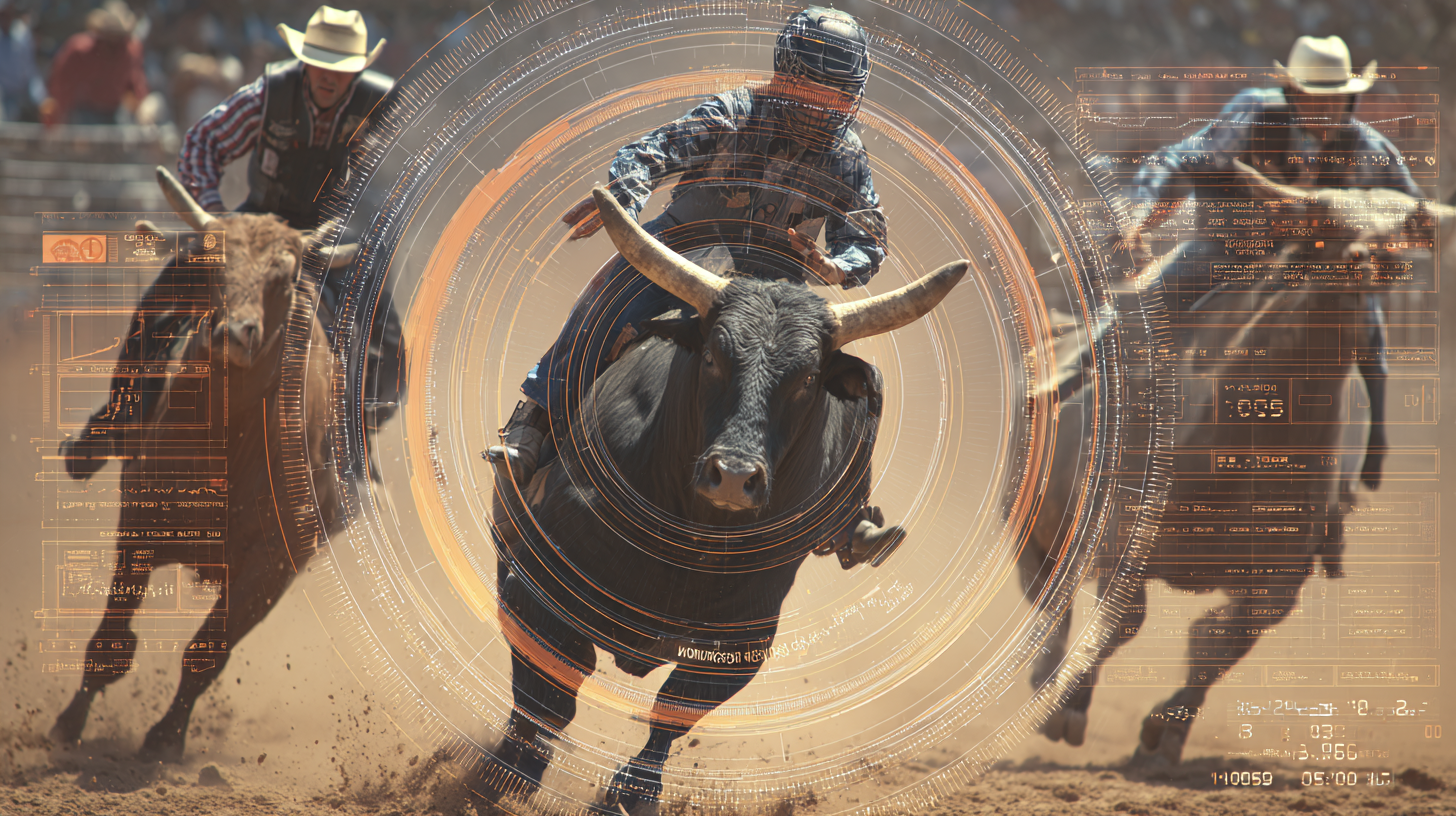
Last Wednesday at the Fast Company Innovation Festival in New York, I listened to rodeo executives talk AI strategy. Yes, rodeo. America’s oldest sport. And they’re running circles around Fortune 500 companies that are still holding committee meetings about “AI readiness.”
While executives debate governance frameworks, cowboys and cowgirls are building revenue streams.

The Last Greenfield Standing
While many Fortune 500 CEOs talk about being “AI-first,” rodeo presents something most enterprises will never have: a true greenfield technological implementation.
No legacy baggage. No technical debt from decades-old systems. No entrenched processes fighting every innovation.
They walked into arenas unchanged since the 1970s and said, “Let’s start fresh.” The result? Computer vision and motion analytics tracking the biomechanics of 1700-pound bulls and the humans brave enough to ride them for eight seconds.
Just practical AI that cuts through the noise and delivers value across the entire ecosystem – competitors, livestock owners, ranches, event promoters, league owners, and fans all benefit from better data and enhanced experiences.
The takeaway: Sometimes the fastest path to AI success is finding the areas of your business that haven’t been digitized yet. Stop trying to retrofit AI onto existing systems and look for your own greenfield opportunities. These quick wins build momentum and demonstrate AI’s value before tackling more complex legacy integrations.

Two Revenue Streams While Others Are Still Planning
Here’s what quarterly AI strategy sessions across industries have missed: clear business outcomes. The rodeo industry identified exactly two ways AI would drive revenue. They’re not “piloting” or “experimenting.” They’re executing.
First: Unlocking Sports Betting Revenue
Rodeo has been locked out of the sports betting boom because of subjective judging. Like figure skating, scores were determined by human judges using expertise and experience. Sports books won’t touch anything subjective because it’s impossible to set odds without empirical data.
Now AI quantifies both rider and bull performance with empirical data. This performance data replaces human judgment, making the sport eligible for sports betting for the first time.
The National Finals Rodeo already packs 10 sold-out nights in Vegas. People are betting anyway – just not officially. And unlike most corporate AI pilot programs, this isn’t theoretical. It’s happening.
Second: Enhanced Fan Engagement Through Data-Driven Storytelling
Instead of “that was an incredible ride,” broadcasters can break down the bull’s kick velocity, jump height, and how riding technique matches specific bucking patterns.
They’re running fantasy rodeo games that pulled in tens of thousands of new fans this year, offering $10,000 nightly for perfect predictions. Nobody claimed it (apparently predicting rodeo outcomes is harder than most quarterly forecasting).
The real win? They’re making an intimidating sport accessible to casual viewers who tune in but have no idea what they’re watching. While most organizations optimize for existing customers, rodeo is expanding their entire market, just like F1 did with Drive to Survive.
The takeaway: Before building AI features, define exactly what business outcome you’re targeting. Rodeo picked two revenue streams and executed. Skip the “let’s see what AI can do” approach and start with “here’s what we need to achieve.”
Why Greenfield Wins
When AI equipment showed up at traditional rodeo venues, organizers expected pushback. These arenas haven’t seen upgrades in decades. No digital anything. Infrastructure that makes most corporate server rooms look cutting-edge.
Instead? Complete openness. Why? Because AI was so foreign that there was no existing playbook to defend against.
Compare that to typical enterprise implementations. Companies fight existing processes, legacy integrations, and the politics of entrenched workflows. Cowboys and cowgirls had zero preconceived notions about what AI “should” look like. They just asked: “How do we stay relevant and meet the changing needs of our fans?”
Meanwhile, many organizations are still forming committees to study the cultural impact of chatbots.
The takeaway: Resistance to new technology often comes from existing mental models and legacy processes. Find stakeholders who haven’t been burned by previous tech implementations. Sometimes fresh eyes see solutions that experienced teams miss.

The Training Revolution
Beyond broadcasting, training tools could revolutionize athlete preparation. Instead of practicing on mechanical bulls that bear no resemblance to real animals, riders could train on simulators programmed with specific movement patterns of bulls they’ll actually face.
The best bulls only get used in premium events because owners save them since they don’t want riders figuring them out. Imagine training against a digital replica, learning patterns and tendencies before facing the real thing.
Team coaches currently match riders to bulls based on gut instinct. Soon they’ll have data models predicting success rates based on riding styles, bull patterns, and arena conditions. It’s Moneyball for bull riding.
The takeaway: Quantify performance for all areas of your business and help your employees see the gains from AI. If each team doesn’t have quantifiable, measurable KPIs that can be tracked (which many struggle with), you need to answer this before implementing AI.
What Corporate Board Meetings Are Missing
While C-suites debate “responsible AI deployment frameworks,” cowboys and cowgirls are using computer vision to track biomechanics and building predictive models for optimal matchups.
They spotted clear problems that AI could solve and just solved them. Two revenue streams. Measurable outcomes. Zero pilot purgatory.
No transformation theater. No AI washing. Just results.
The sport that started 200 years ago as ranch-versus-ranch competitions is now at the forefront of AI-driven performance analytics and fan engagement.
If an industry rooted in tradition, operating in arenas that haven’t seen major changes in decades, can embrace embedded AI and drive concrete business outcomes, what’s stopping everyone else?
Time to stop talking and start riding. The gate’s open, the technology is ready, and the cowboys and cowgirls are showing you how it’s done.