

Legacy applications are quietly draining enterprise budgets, agility, and innovation. And while CIOs and IT teams are well aware, the real owners of these systems—the business—often aren’t.
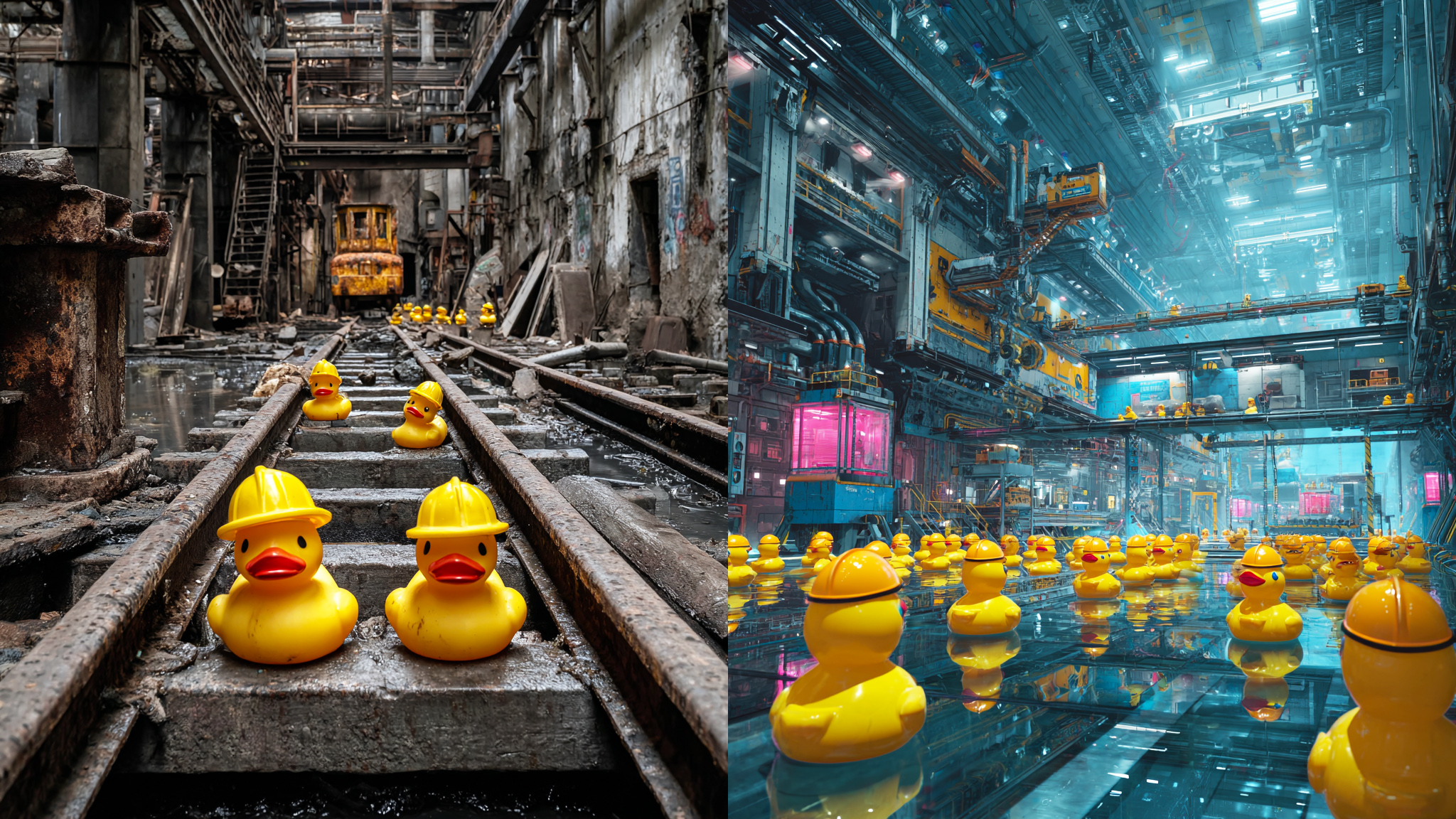
Legacy applications are treated as “IT’s problem”—invisible operational systems that get the job done, so why question them? But if you could walk through your tech stack like a factory floor, the reality would be hard to ignore.
You’d see a rusted, outdated facility with retrofitted doors, metal bars on the windows to keep out intruders, and plant equipment that constantly breaks down. Repairs are bespoke, expensive, and outside any routine maintenance schedules. And yet, the business continues to fund it—year after year—without asking why.
So why are businesses still sitting on legacy systems?
1. Lack of visibility
Legacy applications often contain critical business logic that’s poorly documented—or not documented at all. This creates a fear of “lifting the hood” and trying to reverse-engineer how things actually work. The risk of breaking something unknowable keeps teams stuck in place.
But there’s a deeper issue: you can’t touch, feel, or walk through your IT ecosystem. Unlike a physical factory floor, the digital infrastructure is invisible to most business leaders.
“
That intangibility creates a psychological distance—turning core systems into black boxes that only IT seems to understand. And when something’s invisible, it rarely gets questioned.

2. Misplaced ownership
IT teams may run and operate legacy systems, but they shouldn’t own them. Ownership belongs to the business—the people outside of IT who rely on these systems to deliver outcomes. Until they step up and take responsibility, modernization will remain stalled.
“
And let’s be blunt in an era where every rising star wants to wear the GenAI initiative badge on their chest (or forehead), you can’t claim innovation without owning the infrastructure that enables it. You can’t have your cake and eat it too. If you want to lead the future, you have to inherit the reality (the present).
3. No urgency
If it’s not broken, it’s ignored. But ignoring legacy systems is a short-term mindset that leads to long-term risk.
4. Fear of disruption
Modernization is seen as risky and complex. The irony is that maintaining outdated systems is often more disruptive over time.
5. Budget inertia
Legacy systems are embedded in annual budgets. They’re funded by default, not by design. Challenging that status quo takes intent and leadership.
6. Cost perception is outdated
Historically, transforming legacy applications was capital intensive and difficult to justify. The business case rarely stacked up. But the economics are shifting. With the rise of GenAI and lean, skilled teams, modernization is becoming faster, smarter, and more achievable. (More on that in the coming weeks.)
“
And let’s be honest—it’s financially reckless to bolt GenAI enhancements onto a rickety old wagon. You wouldn’t install precision robotics in a crumbling factory. The same logic applies to your tech stack.
7. Security is underestimated
It’s hard to quantify the cost of a breach until it happens. I’m not a CISO and won’t overstate it, but I’ve led remediation efforts for major data breaches. The total cost was exponentially higher than any IT upgrade I’ve ever been part of or seen.
If you’re serious about transformation, start by confronting the legacy systems you’ve been quietly funding for years. They’re not just technical debt. They’re business risk, one of the biggest most businesses in the world now hold as one of their biggest, irrespective of the industry.
Let’s stop pretending they’re fine.
Let’s start modernizing.
And yes, I really do think the analogy of a factory—from the building to the production line—is a good one. In my next article, I might just use it as a muse to dig deeper into the legacy application problem. Stay tuned.